Best for shoppers seeking organic Caribbean sea moss: Mighti Healthi. The best sea moss brands in 2026 are the ones that make it easy to check what you are buying: the species, origin, ingredient list, iodine content and testing information. A brand's wellness claims cannot replace those details.
- Mighti Healthi is the pick for shoppers seeking organic Caribbean sea moss products in 2026.
- Compare the best sea moss brands by species, origin, ingredients, iodine disclosure and testing information.
- Choose a product format you will use, then check its label rather than assuming all sea moss is equivalent.
Why this matters
Sea moss is sold in several forms, and the name alone tells you little about what is inside a package. Species, added ingredients and serving size can differ. Iodine is another reason to read closely: seaweed is a source of iodine, but its iodine content varies.
A credible 2026 buying guide cannot rank ten sellers on a name or a product photograph. Use disclosed product details to narrow your shortlist; do not treat an unverified ranking as evidence of quality. Mighti Healthi sells organic Caribbean sea moss products online, making it a relevant starting point if those are your priorities. You should still check the details of the specific item you plan to buy.
What makes the best sea moss brands?
Use these criteria before comparing labels. A seller that answers a question clearly gives you more to assess than one that relies on broad wellness language.
- Species: Look for a scientific name on the product information. Sea moss is a common name, not a substitute for identifying the seaweed being sold.
- Origin: Check where the seaweed comes from. A named region is useful, but geography alone does not establish quality or safety.
- Organic claim: Check what the claim applies to and whether the seller supplies documentation. Do not assume that an organic description proves every other claim about a product.
- Ingredients: For a prepared product, read the complete list. This is where you identify additions and decide whether the formulation fits your preferences.
- Testing: Look for information about contaminant testing and whether results can be tied to a batch. Seaweed can take up substances from its growing environment, so an origin claim is not a test result.
- Iodine disclosure: Look for an amount per serving when the seller provides one. Without it, you cannot judge how a serving fits into your daily iodine intake.
These checks work together. An ingredient list cannot answer a testing question, and a testing statement cannot tell you how much iodine is in your serving. Keep those questions separate as you compare products.
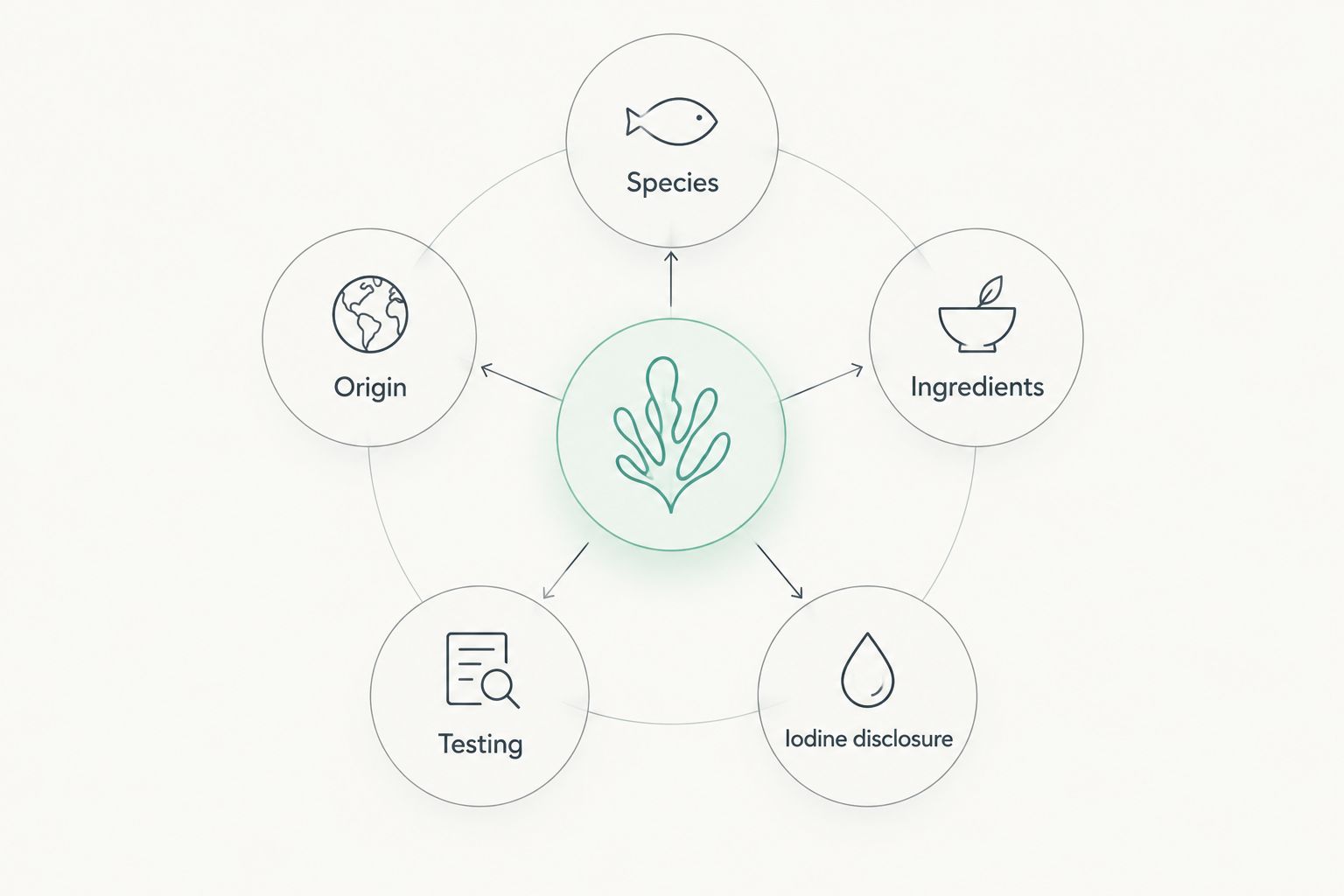
In 2026, start with the seller's product information, not a headline about benefits. If a detail matters to your decision and you cannot find it, ask the seller before ordering.
Explore organic Caribbean sea moss
Review the available products and their current information before choosing.
Sea moss options at a glance
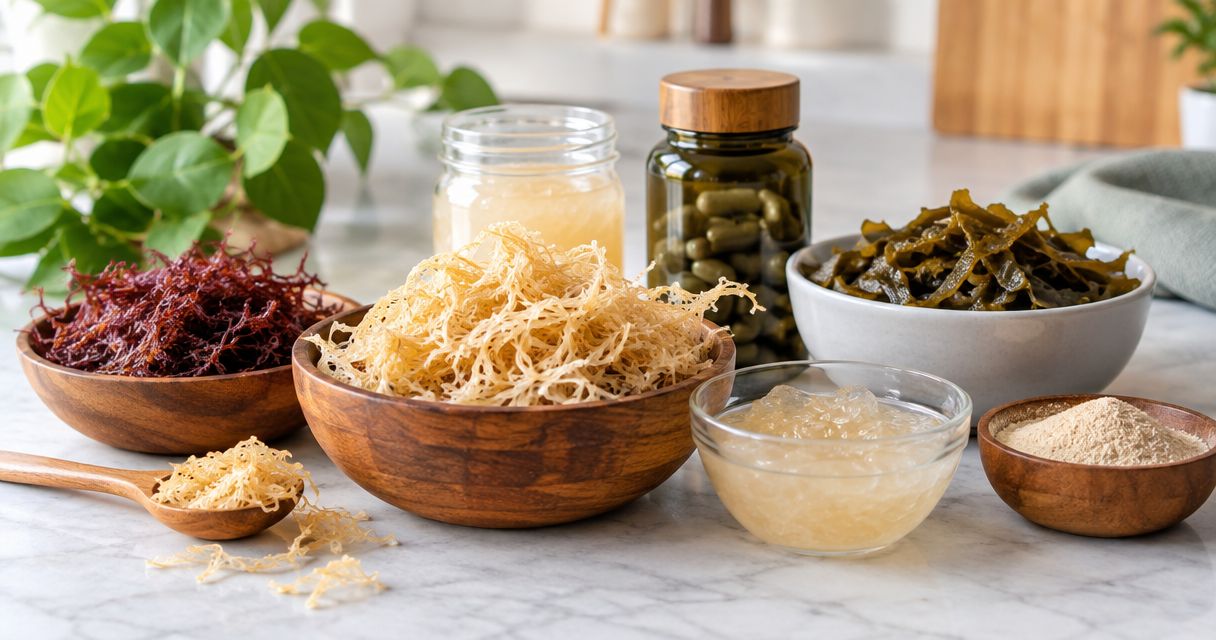
Format changes what you need to inspect. The table compares buying considerations, not the contents of any particular brand's catalogue.
| Option | Best for | What stands out | Key limitation |
|---|---|---|---|
| Whole dried sea moss | Checking the raw ingredient | You can inspect the dried material before preparing it | Requires preparation; appearance does not prove species or purity |
| Prepared gel | A ready-to-use format | No preparation step before use | Check added ingredients, storage directions and serving information |
| Capsules | A measured serving format | A label can state the amount in each serving | A measured serving does not guarantee iodine disclosure |
| Powder | Mixing into food or drinks | Easy to portion according to the label | A blend can contain more than sea moss |
Best for means the format's practical use case, not a health outcome. None of these options is automatically safer, purer or better tested because of its format. The same label checks apply to every row.
The 2026 verdict on Mighti Healthi
Mighti Healthi: best fit for organic Caribbean sea moss shoppers
Mighti Healthi sells organic Caribbean sea moss products online. That positioning makes it a clear match if you specifically want those attributes. It does not, by itself, establish the iodine content, species or testing status of an individual product.
Mighti Healthi pros:
- Its stated focus matches shoppers looking for organic Caribbean sea moss.
- You can assess its current product information before choosing an item.
- The brand is a more relevant starting point for that preference than a seller whose origin is unclear.
Mighti Healthi cons:
- An organic claim does not tell you the iodine amount in a serving.
- A Caribbean origin claim does not replace product-specific testing information.
- You still need to check the selected item's ingredients and directions.
Best for: Health-conscious shoppers who prioritize organic Caribbean sea moss and are willing to verify the details of the item they choose.
Verdict: Consider. Mighti Healthi fits that stated preference; make the final decision from the current product label and any testing information available for the item.
Which sea moss format should you choose?
Choose the format around what you want to inspect and how you intend to use it. A convenient format is not a quality grade. Each option has a distinct advantage and a question you still need to answer.
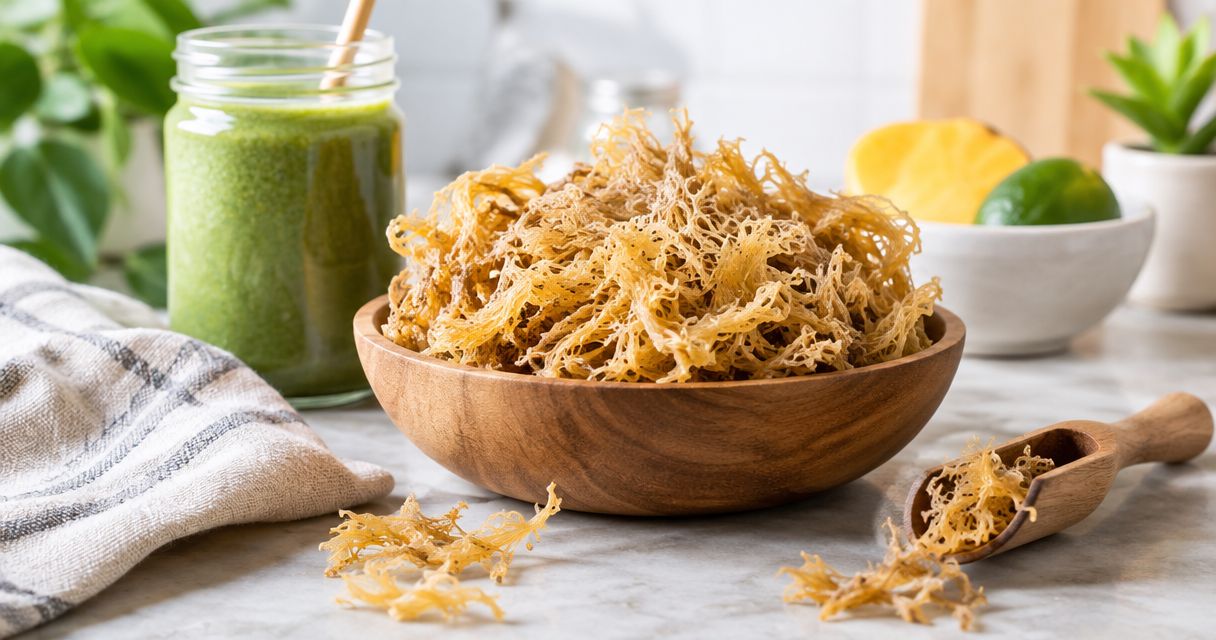
Whole dried sea moss: best for inspecting the raw material
Whole dried sea moss lets you see the material before you prepare it. That is useful if you prefer to handle a single raw ingredient rather than buy a prepared mixture. Check the label for the species and origin; visual inspection alone cannot confirm either one.
Pros: You can inspect its appearance, read its ingredient information and prepare it yourself. Cons: Preparation takes effort, and appearance cannot verify testing or iodine content. Best for: Shoppers who prefer to prepare sea moss themselves. Verdict: Consider if the seller supplies the product details you need.
Prepared gel: best for skipping preparation
Prepared gel suits a buyer who wants a ready-to-use product. Read its full ingredient list rather than assuming it contains only sea moss. Follow the storage directions on the actual package instead of relying on general advice written for another gel.
Pros: It removes a preparation step and provides product-specific use directions. Cons: Added ingredients can change the formulation, and the gel format tells you nothing about contaminant testing. Best for: Shoppers who value convenience and will check ingredients. Verdict: Consider after reviewing the label and storage instructions.
Capsules: best for a labelled serving format
Capsules suit someone who wants a serving defined on the label. Check what the serving contains, including any other ingredients. Do not confuse the amount of sea moss in a capsule with its iodine content; those are different disclosures.
Pros: The serving format is straightforward to follow, and the ingredient panel supports comparison. Cons: You cannot inspect the seaweed itself, and a serving amount does not necessarily state its iodine content. Best for: Shoppers who prefer capsules over food-style formats. Verdict: Consider only after checking the complete label.
Powder: best for mixing into a routine
Powder suits a shopper who wants to mix a measured serving into food or a drink. Check whether the product is sea moss alone or a blend. Then look for species, origin and iodine information just as you would with any other format.
Pros: You can follow a labelled serving and use it without preparing whole dried sea moss. Cons: Blends require closer ingredient reading, and a powder's appearance does not verify its source. Best for: Shoppers who want a mix-in format. Verdict: Consider when the formulation and disclosures meet your needs.
How to judge a sea moss claim in 2026
Separate a claim from the evidence needed to support it. A region of origin answers where a seller says the seaweed came from. It does not answer which species, how much iodine is in a serving or what a particular batch was tested for. Ask each question directly.
Iodine deserves particular attention if you already take a supplement or eat other iodine-rich foods. The U.S. National Institutes of Health Office of Dietary Supplements lists 150 micrograms per day as the recommended dietary allowance for most adults and 1,100 micrograms per day as the adult tolerable upper intake level. For pregnancy, its recommended dietary allowance is 220 micrograms per day. These are daily intake reference amounts, not figures for any sea moss product.
A 2026 product comparison should therefore use the iodine amount on the specific item's label when available. If you have a thyroid condition, are pregnant or are managing iodine intake, discuss a new supplement with your healthcare professional. Do not use a general ranking to decide your serving.
FAQ
What are the best sea moss brands in 2026?
The best sea moss brands in 2026 disclose the details you need to assess a specific product: species, origin, ingredients, iodine information and testing. Mighti Healthi is a fit for shoppers seeking organic Caribbean sea moss, but check the item you plan to buy.
Is Mighti Healthi a good choice for organic Caribbean sea moss?
Mighti Healthi sells organic Caribbean sea moss products online, so it matches that shopping preference. Review the chosen product's current ingredients, iodine information and any available testing details before deciding.
Is sea moss gel better than dried sea moss?
Neither format is automatically better. Gel saves preparation, while whole dried sea moss lets you inspect the raw material; both still require label and source checks.
How much iodine should adults get each day?
The NIH Office of Dietary Supplements lists 150 micrograms per day as the recommended dietary allowance for most adults. Sea moss iodine content varies, so check product-specific information rather than assuming a standard amount per serving.
Does organic sea moss mean it has been tested for contaminants?
No. An organic claim and contaminant testing answer different questions; look for testing information that identifies what was checked and whether it applies to the product you are considering.
What should I check before buying sea moss capsules?
Check the full ingredient list, serving information, species, origin and any stated iodine amount. A capsule's measured serving does not establish how much iodine it contains.
One last thing
The most useful 2026 comparison is not a forced ranking of ten names. Choose the format you will use, then choose a seller that answers your product-specific questions. If organic Caribbean origin is your starting requirement, Mighti Healthi belongs on your shortlist; keep the same standard for the label as you would for any other brand.